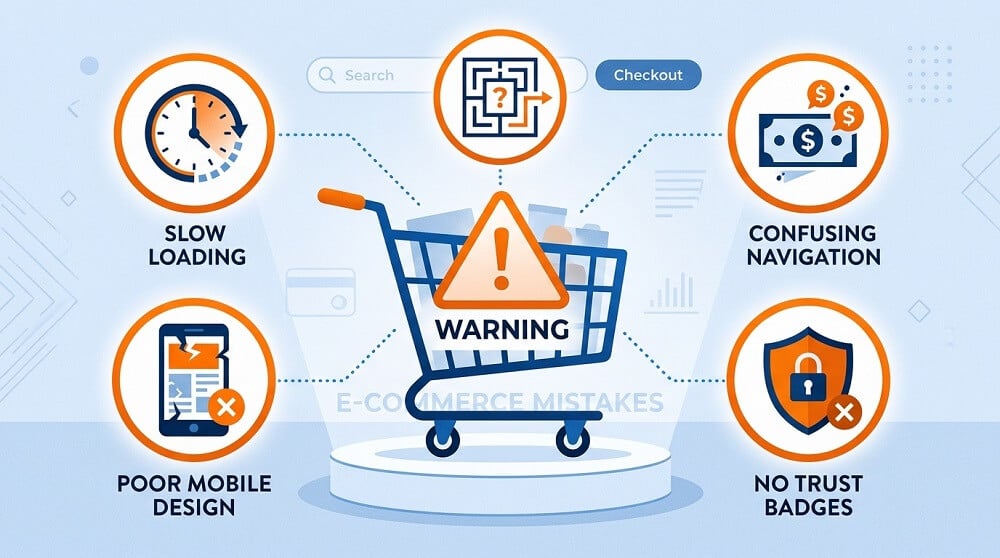
Building an e-commerce store is only the beginning. The real challenge is ensuring that visitors who arrive with genuine intent to purchase actually complete the transaction. Across the industry, the average cart abandonment rate hovers around 70% – meaning the majority of potential sales are lost before a single payment is processed.
Many of these losses are preventable. Here are five of the most common e-commerce mistakes – and what you can do to fix them.
1. A Checkout Process With Too Many Steps
Every additional step in the checkout flow is an opportunity for a customer to abandon. A process that requires account creation before purchase, asks for unnecessary information, or spans multiple pages without a clear progress indicator will drive significant drop-off.
Streamline your checkout to the fewest possible steps. Offer guest checkout as a default option. Use auto-fill where possible, and keep form fields to an absolute minimum.
2. Hidden Costs That Appear at the Last Moment
Presenting shipping fees, taxes, or handling charges only at the final checkout stage is one of the leading causes of cart abandonment globally. Customers feel misled, and that feeling of distrust is enough to send them to a competitor.
Display all costs – or an accurate estimate of them – as early as possible in the shopping journey. A shipping calculator on the product page or cart can significantly improve conversion rates.
3. Poor Mobile Experience
More than half of all e-commerce traffic now originates from mobile devices, yet many online stores still deliver a compromised mobile experience: small tap targets, horizontal scrolling, images that do not scale, and checkout forms that are difficult to complete on a small screen.
A mobile-first approach to e-commerce design is no longer optional. Every element of the shopping journey must be tested and optimised for the smallest screen your customers are likely to use.
4. Insufficient Trust Signals
Online shoppers are sharing financial information with a business they may have discovered only moments ago. Trust must be actively established – it is not assumed. Stores that lack visible trust signals see significantly higher abandonment rates.
Ensure your store displays: SSL security indicators, recognised payment method logos, genuine customer reviews, a clear returns and refund policy, and accessible contact information. Each of these signals reduces the perceived risk of purchase.
5. Slow Page Loading on Product Pages
High-resolution product images are essential for conversion – but unoptimised, they are also one of the most common causes of slow page loading. A product page that takes more than two to three seconds to load will lose a substantial portion of its visitors before they have even seen the item.
Compress images without sacrificing visible quality, implement lazy loading for images below the fold, and consider a CDN to serve assets quickly to users in different locations.
Each of these mistakes represents a solvable problem. Addressing them systematically – using data from your analytics platform to prioritise where abandonment is highest – will produce measurable improvements in revenue without requiring additional marketing spend.